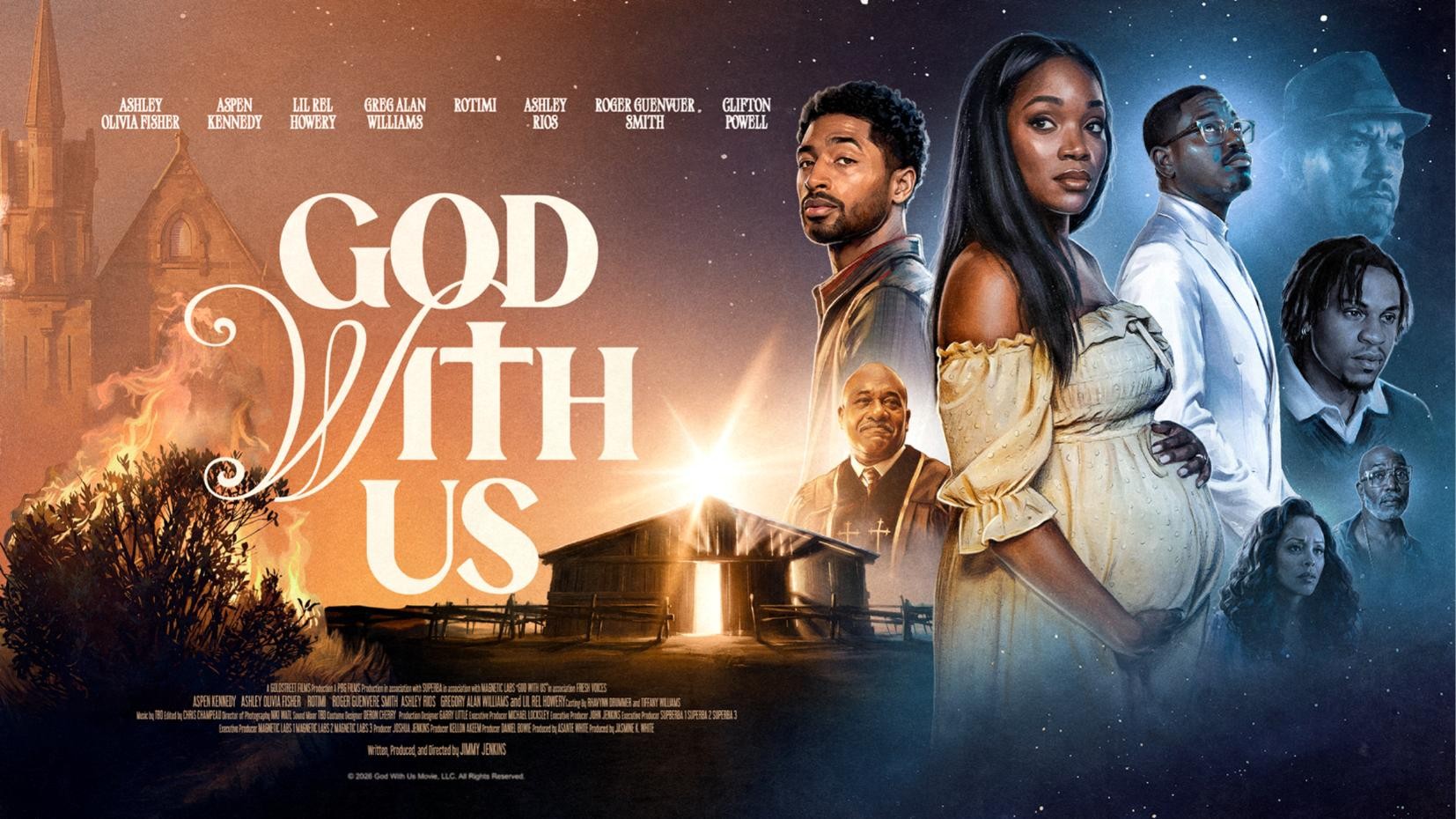
God With Us
Broadcast · Cable · Syndication
From awareness to a household decision
God With Us is a faith film that needs people to do one thing: decide to see it in a theater. That decision is made at home, by a household, and it competes with every other way a family could spend an evening. Linear television reaches that household on the biggest screen in the room, in the weeks the campaign runs.
Become aware
The message lands in front of the household during programming they already watch.
Consider the film
Repeated placements keep the title and the story in front of them across two weeks.
Choose to go
The household decides to make the trip to a theater, not to wait for home viewing.
November 5–18 is the campaign flight. It is built around the release: two weeks of placements that put the film in front of the household before the decision window closes, and through it.
A campaign is only as good as the people it reaches, so the first real question is who makes this decision.
Three filters, not one score
Who sees the film depends on three separate things. This plan is built to pass all three.
Who fits
The programs and networks in this buy are where the film's core audience already is: faith, family and Black households, reached through the formats they watch.
Who can spend
A theater outing is a household purchase: tickets, concessions, and the trip. This plan reaches households at the moment that purchase is made — on the biggest screen in the room.
Who will go
Fit and budget open the door. The message walks the household through it: this is a film worth making the trip to see.
The household ticket basket
An income or cinema cross-tab for these weekday feeds is not available for this proposal, so the wallet is presented as the decision itself: the household buying tickets, concessions and the trip, yes or no. Two weeks of repeated placements, in the rooms where families watch, is what carries the message to that decision.
Reach the right household and the decision is winnable. The next question is where, exactly, the message should sit.
Five shows, three networks, one live event
Three placement families, each with a distinct job. Syndication supplies weekday frequency, cable supplies the culture networks, and NFL Network supplies one concentrated live moment. None is a substitute for the others.
Five weekday programs
11.4M impressions · $13.54 CPM · $154,000
| Program | Spots | Rate per :30 | Allocation |
|---|---|---|---|
| America's Funniest Home Videos | 4 | $5,000 | $20,000 |
| Family Feud | 2 | $45,000 | $90,000 |
| Family Feud Favorites | 4 | $4,000 | $16,000 |
| Flip Side | 4 | $4,000 | $16,000 |
| The Neighborhood | 4 | $3,000 | $12,000 |
| Total | 18 | — | $154,000 |
Program by program
Home-video clip comedy. This buy is the weekday syndicated run, a different schedule from the ABC Sunday network airing.
Buy: planning workbook · Format: Disney / ABC press listing
Steve Harvey-hosted game show from Debmar-Mercury. The largest single line in this option.
Buy: planning workbook · Format: Debmar-Mercury
A separate Debmar-Mercury feed of Family Feud episodes, priced and placed apart from the flagship.
Buy: planning workbook · Format: Debmar-Mercury
Daytime syndicated game show distributed by CBS Media Ventures, hosted by Jaleel White.
Buy: planning workbook · Format: Trade listing (secondary)
CBS comedy starring Cedric the Entertainer (2018, eight seasons), now in off-network weekday syndication.
Buy: planning workbook · Format: CBS show page
These are the formats families already line up for. Nielsen's syndication top 10 for the week of Aug 24–30, 2026 ranks Family Feud third nationally — 7.326M Persons 2+ viewers, a 4.4 household rating — proof of the scale these formats command. Proposed 30-second weekday placements; weekend variants are a separate line.
BET, TV One and Bounce
12.8M impressions · $9.75 CPM · $125,000
Cable network under Paramount's BET Media Group.
Source: bet.com · Share of the $125,000: not split by network
An Urban One brand. Programming includes Unsung and Urban One Honors.
Source: tvone.tv · Share of the $125,000: not split by network
Scripps network that describes itself as the first African American broadcast network. It airs on local stations' broadcast signals with matching cable carriage, so it sits in this cable line by placement.
Source: bouncetv.com · Share of the $125,000: not split by network
Proposed BET / TV One daypart mix
Markets are heavied up or eliminated as distribution confirms; the mix flexes to protect prime and early fringe.
That is frequency and culture. The third family is different in kind: one optional live moment that concentrates the plan.
How each setting shapes the message
The setting an ad lands in changes how it is received. A game show, a sitcom, and a live football game each put the audience in a different state of attention, and the creative has to carry the title and the message across all of them.
TRIBE response dimensions — attention and arousal, familiarity, narrative processing, memory cues — read from each program's format, so the creative meets the household where each setting puts it.
TRIBE dimensions, by placement
Unpredictable visual punchlines in a format families may co-watch. The spot rides the same surprise-and-laugh beat.
A survey-answer game with built-in tension. The message enters a format the audience already follows.
A separate feed of a familiar brand, so the same recognition carries on a lighter weekday schedule.
A daytime turn-based game. The spot lands inside a fast, light daytime setting.
A sitcom with story beats and an established cast, so narrative context frames the message.
Mixed programming, so no single show profile is assumed. The network itself carries the culture context.
Culture and music programming. Context varies by program, so only the network-level identity is claimed.
Broadcast-style family programming. The spot inherits the network context, not one show profile.
A live game pulls the household into its own emotional state — the spot carries the film's message out of that state and into a new one. High in-the-moment attention is the reasonable read: hypothetical, but the strongest anchor in this plan.
Why this matters for the creative
Humor carries familiarity in a game show, story carries meaning in a sitcom, and live tension carries urgency in a game. One message, tuned to each setting, so the title and the reason to see the film stay intact no matter where the spot runs.
How it connects to repetition
Each setting primes a different kind of attention. The message, seen more than once across settings, gives the household more than one route to remember it — and recall is what turns awareness into a ticket.
One exposure fades. The plan is built so the household never has to rely on one.
How long does one exposure carry?
Attention is in the moment. Carryover is what keeps working after the spot ends — and carryover is what builds the recall that turns awareness into a ticket. The chart shows three planning scenarios for how fast that carryover decays.
Illustrative decay of a single exposure
HypotheticalR(t) = 0.5^(t/h) · equal exposure at day 0 · h = 1, 3, 7 days
Share of total carryover realized within 14 days
The scenarios differ in how fast carryover decays; the flight's own response data will show which is closest. What they share: the household sees the message more than once across the two weeks, and repetition is what builds the carryover that turns awareness into a ticket.
If carryover runs long, a good share of the effect lands after the flight ends — into the VOD window.
Planning scenarios — 1, 3 and 7-day half-lives, equal exposure — labeled hypothetical. Real carryover is read from the flight's own response data.
Carryover by program — flight to VOD
Planning model| Program | Exposures | Flight-end stock |
|---|---|---|
| America's Funniest Home Videos | 4 spots | 12.8% |
| Family Feud | 2 spots | 6.4% |
| Family Feud Favorites | 4 spots | 12.8% |
| Flip Side | 4 spots | 12.8% |
| The Neighborhood | 4 spots | 12.8% |
| BET / TV One / Bounce | Daily × 14 | 41.5% |
| NFL Network · Nov 9 | 1 event | 1.1% |
| Full flight | — | 100% |
Carryover to the VOD anchor (Dec 18 — planning date, locks with distribution) decays uniformly across programs: 0.1% of flight-end stock at the 3-day planning half-life, 5.1% at the 7-day. What differs between programs at VOD is quantity and memory — the game is 1.1% of flight-end stock, but it is the strongest memory cue in the plan.
What it means for the release
Through the theatrical window, modeled stock is at its maximum — the flight peaks at flight end, with the Nov 9 event layered on top of the rotation. The release data is reading that curve: every day of the flight carries forward into the decision to buy a ticket.
What it means for the VOD date
By the VOD window, the adstock component has decayed — that is what decay is. The durable component is recall: the title the household still remembers, and the conversation the game started. That is what the proposed recall test measures, and it is built to outlive the curve.
Planning model — exposures as scheduled (syndication 18 spots across the weekday slots, cable daily × 14, NFL event Nov 9), 3-day half-life for the curves with the 7-day shown dashed; the per-show split assumes spots spread across the weekday slots and locks with the schedule. Real carryover is read from the flight's own response data.
Repetition is the rhythm. The next beat is the spike: one optional live moment the plan is built to work with.
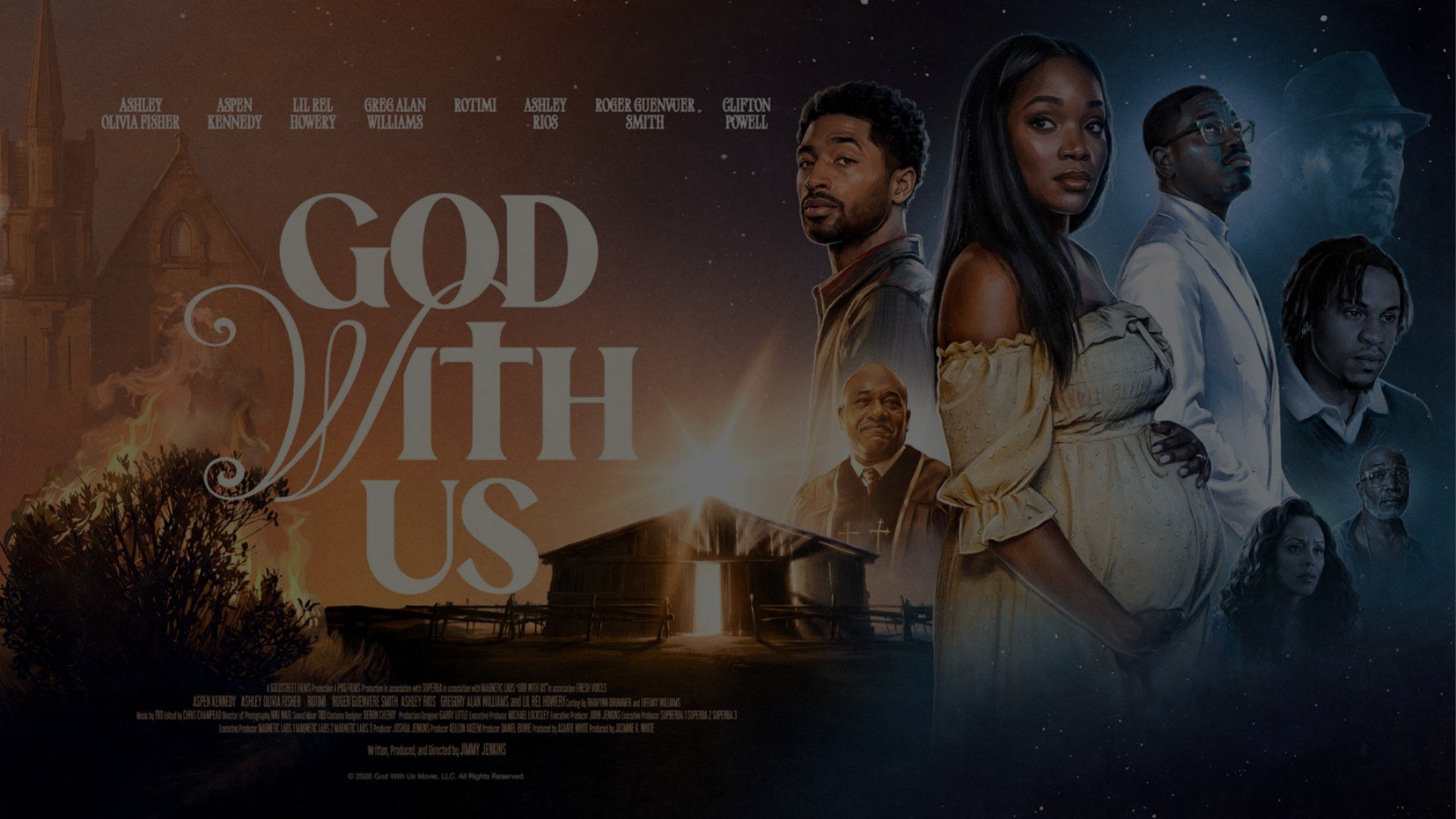
Falcons vs. Bengals
NFL Network · Week 9 · from Madrid · Planned for Nov 9
NFL Network national game (Week 9, Bernabéu Stadium, Madrid) with over-the-air simulcasts in Atlanta and Cincinnati — free, and broad, in the film's core markets. The plan carries Nov 9, per the client's Sep 16 planning call; the published schedule lists the kickoff on Nov 8, and the air date confirms at schedule lock.
What a tentpole is
A tentpole is one concentrated attention event: a lot of people watching the same thing at the same time. Here, the candidate is the live Falcons–Bengals game on NFL Network.
If the game is in the buy, the cable and syndication rotation runs around it — the same message in front of households before and after. The rotation stands on its own; the game concentrates and positions it.
Concentration is the point: one day, one moment, and the whole market watching it.
Why this game, for this film
As the designated home team, the Falcons' Atlanta market carries the game over the air. Free and broad, in the film's core market.
Cincinnati (Bengals' market) picks up a second over-the-air simulcast.
This is the buy that positions the film as huge. One live moment plants the belief that this is a film the whole market is talking about — and it carries fewer rotation days than the weekly feed, by design. The window where it works is immediately after the broadcast; the memory, if the moment lands, can surface later, at VOD, in the conversations after the weekend. The spot works with the game's own emotional state: it meets the household inside the game and carries the film's message out of it, into a new one.
Game facts: the published NFL schedule lists the kickoff Sunday, Nov 8, 9:30 a.m. ET (NFL.com; ESPN and atlantafalcons.com agree); the Sep 16 planning call carried Nov 9. Air date, spot count and position within the game confirm at schedule lock.
November 5–18, 2026
Two-week window · 14 days · Weekday rotation, with one live moment on Nov 9
Syndication and cable run weekdays across the flight; the game — an optional add — concentrates the plan on Nov 9. Spot dates lock with the schedule.
Syndication and cable build familiarity through the flight's first week, placing the title in front of households before the game.
The live game concentrates attention at one moment, with over-the-air simulcasts in Atlanta and Cincinnati.
Syndication and cable keep the message in front of households after the game, while the moment is still fresh.
Lead-in builds recall. The event concentrates it. The reminder locks it in.
The plan is assembled. Here is what we would buy — and why.
Pick what you need
Two-week flight: November 5–18, 2026
Three separately priced buys, each independent. Select any combination and the total investment, impressions and blended CPM update live. Figures lock with the schedule, and the plan does not change.
Select the buys you want.
Here is what we would buy — and why.
The rotation is the bet
The adstock section above is the case. The rotation — syndication and cable together — carries 98.9% of the modeled adstock into the release window, day after day for two weeks. That is the upside: sustained, cumulative, and measurable. The NFL game is a different asset: the biggest audience of the month, one live moment, 1.1% of the carry. Our recommendation is the $279,000 rotation; the game is the feather in the cap.
The recall engine
Syndication + Cable · $279,000
Eighteen syndicated spots on every weekday of the flight, plus prime and early-fringe rotation on BET, TV One and Bounce. This is the rotation that builds memory recall — and the table above is why it leads: it carries 98.9% of the modeled adstock into the release window, compounding every day of the flight, which is exactly the window the release and the VOD decisions happen in. The rotation stands on its own. This is what we would buy.
The feather in the cap
NFL Network · $300,000
One live moment, over the air in two core markets, with the biggest audience of the month — real viral potential, the kind of moment that positions the film as huge. But the household is watching the Bengals and the Falcons, and a 30-second commercial has to wrest their attention away from the game, which is genuinely hard. The carry is small by design: 1.1% of the modeled adstock, and the window where it works is immediately after the broadcast, not at VOD. Buy it for the moment, not for the math.
$279,000 buys the carry — 24.2M impressions at a blended $11.53 CPM. Both together — $579,000, 28.8M impressions at a blended $20.11 CPM — stays available in the selector for anyone who wants the rotation and the moment. The recommendation is the rotation.
A plan is only as good as the proof it can produce.
Recall and tickets are different tests
Proposed measurement plan — not measured results
Three outcomes matter, and they are measured separately so the campaign proves exactly what it did. Recall proves the message landed. Box office proves the household made the trip. Home viewing is tracked as its own, later outcome.
Recall
Do households remember the film and its title? Proposed test: a delayed-recall survey against a matched control, at set intervals after exposure. This measures the message, not the purchase.
Method: viewing survey or experiment, not a convenience sample.
Theatrical box office
Did a household actually buy a ticket? Proposed test: ticket purchases in exposed markets against a control market, with a pre-flight baseline. The campaign's primary outcome, reported separately from any home-viewing revenue.
Method: ticket transaction lift against a control, not matched revenue alone.
Home viewing (PVOD)
Did households watch at home later? Proposed test: PVOD rentals and purchases in the same exposed and control markets after the theatrical window. This is where the game's seeded memory shows up.
Reported separately from box office.
What a clean result needs
The control is assigned before the flight, with a pre-period baseline, so lift is measured against what would have happened anyway — not against matched revenue.
Markets are comparable and chosen in advance, and the design accounts for the concurrent digital and trailer campaign, release timing, and word of mouth.
Daily delivery and daily response data across the flight — and the window after it — is what reads carryover. The proposed design runs on that schedule.
The proposed tests cover all three outcomes. What remains is the decision itself.
One flight. Your call.
Each option stands alone
Each of the three buys works as a complete plan on its own. Combine any of them; nothing is bundled.
Our recommendation: the rotation
Syndication + cable, $279,000 — the rotation that carries essentially all of the modeled adstock. The NFL game is the optional feather in the cap: the moment, not the carry. Each buy still stands alone in the selector.
Schedule lock confirms the numbers
Networks, dayparts, and the game's air date lock with the schedule. The plan above is the plan that ships.